Protegra - Digital Trade Enablement Infrastructure for SME Internationalisation
PROsperity through Technology Enabled Growth, Reach and Access.
Small and medium-sized enterprises form the backbone of most economies, yet many remain underrepresented in international trade.
While digital technologies have significantly lowered the barriers to global market access, SMEs often lack the coordinated infrastructure needed to connect with international buyers, partners and support services.
Protegra addresses this challenge by enabling institutions to establish a structured digital Trade Enablement Infrastructure that supports SME internationalisation.
What is Protegra?
Protegra – the digital Trade Enablement Infrastructure for SME internationalisation – is a structured ecosystem designed to help institutions support SME growth in global markets through coordinated infrastructure, multilingual visibility and aggregated market intelligence. (Download a One Page Executive Overview.)
It enables chambers of commerce, export promotion agencies, trade associations and financial institutions to deploy scalable export infrastructure for their SME communities.
Protegra operates within a broader digital trade ecosystem that includes multilingual discovery infrastructure (ExpoWorld.cloud) and practical guidance resources provided through the International Trade Knowledge Centre.
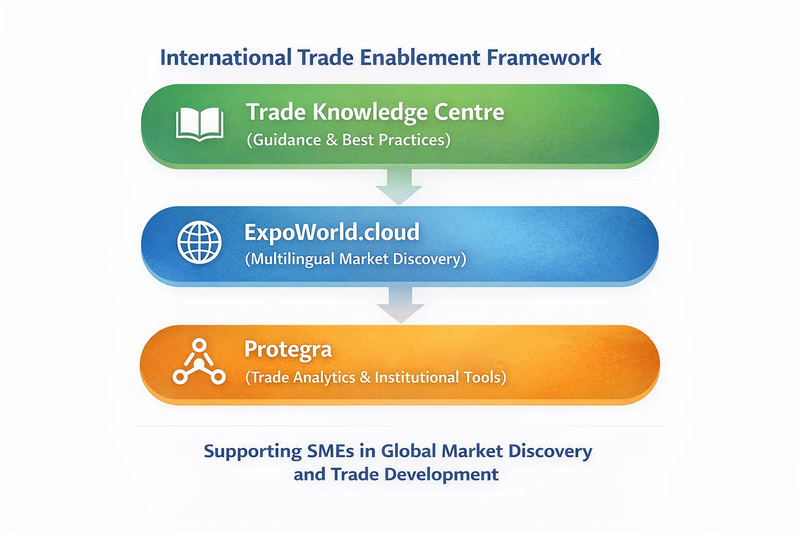
The multilingual discovery infrastructure that generates many of the underlying signals analysed by Protegra is provided through ExpoWorld Multilingual Microsites, while the Knowledge Centre provides guidance and best practices for companies developing international trade capabilities.
While SMEs form the backbone of most economies, their ability to scale — particularly across borders — is often constrained not by lack of ambition or capability, but by the fragmented nature of the support environment around them.
Protegra provides a practical, deployable framework that enables institutions to establish a coordinated Trade Enablement Infrastructure combining digital visibility, market intelligence, collaboration tools and export support resources.
SMEs require low-cost, frictionless access to a wide range of services that support growth and internationalisation.
However, the primary constraint today is no longer access to information — it is fragmentation.
SMEs do not need more disconnected content or isolated initiatives.
They need a coordinated infrastructure that connects them to:
- International Markets.
- Financing and Trade Support.
- Strategic Partners.
- Sector Intelligence.
- Export Capability Development.
Advances in AI, SaaS architecture and interoperable digital platforms now make it possible to deliver this type of integrated support model efficiently and at scale.
Protegra operationalises this opportunity by enabling institutions to deploy structured digital trade infrastructure for their business communities.
At the foundation of this infrastructure is multilingual digital visibility, supported by aggregated analytics that help institutions identify emerging international demand patterns and opportunities.
Who is Protegra for?
Protegra is designed for organisations that support SME growth and internationalisation, including:
- Banks and Trade Finance Providers.
- Chambers of Commerce.
- Export Promotion Agencies.
- Trade Associations and Industry Clusters.
- Economic Development Agencies.
For institutions serving a significant SME client or member base, deploying a tailored Protegra platform enables them to:
- Strengthen engagement with their business community.
- Expand the depth and reach of services without increasing internal headcount.
- Generate valuable aggregated market intelligence.
- Deliver measurable economic impact through SME internationalisation.
- Position themselves as a strategic digital enabler of trade.
See the next tab to review the structural barriers that currently limit SME growth and international expansion, and why coordinated digital infrastructure is required to address them.
Why Don't More SMEs Export?
Across multiple international studies, the barriers preventing SMEs from entering or expanding in export markets are remarkably consistent.
While many smaller companies have products or services that could compete internationally, relatively few develop sustained export activity.
The reasons are rarely related to capability or ambition. More often, they reflect structural challenges in the export environment surrounding SMEs.
Common Barriers to SME Export Growth
Absence of Structured Export Planning
Many SMEs operate successfully in domestic markets but lack a formal strategy for identifying and developing international opportunities.
Perceived Complexity and Cost
International trade is often viewed as administratively complex, legally uncertain and financially risky — particularly for companies with limited internal resources.
Market Entry Risk
Traditional export guidance frequently requires SMEs to select a target market and commit significant time and investment before any evidence of real demand exists. For many companies, this represents a disproportionate commercial risk.
Fragmented Support Ecosystems
Although many export support services exist — from advisory programmes to trade promotion initiatives — they are rarely integrated.
Few organisations provide coordinated support across the full export lifecycle, from market discovery to completed transactions.
As a result, many SME export initiatives stall before meaningful commercial traction is achieved.
The Structural Challenge
The core issue is not lack of information. It is lack of coordinated infrastructure.
For SMEs to participate effectively in international trade, they require structured support across several essential functions.
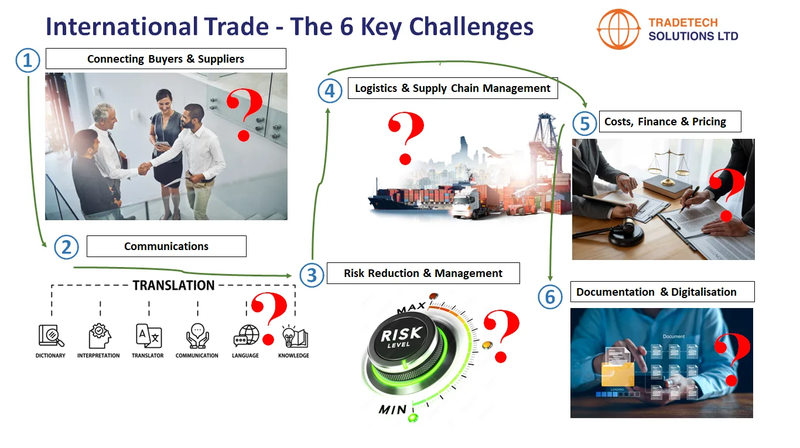
These include:
- Connecting buyers and suppliers.
- Facilitating cross-border communication.
- Managing commercial and regulatory risk.
- Coordinating logistics and supply chains.
- Structuring pricing, costs and trade finance.
- Navigating documentation and digital compliance.
When these capabilities are fragmented across multiple providers, SMEs must attempt to coordinate them independently — increasing cost, complexity and uncertainty.
The Required Institutional Response
What SMEs need is not simply additional advice or isolated programmes.
They need coordinated digital infrastructure that connects markets, information and support services in a structured and accessible way.
This is the role of a Trade Enablement Infrastructure.
The Protegra ecosystem provides such an infrastructure by integrating multilingual digital visibility, collaboration tools, export readiness resources and aggregated market intelligence within a single scalable framework.
Addressing these structural barriers requires more than advisory services alone. The next section explains how the Protegra framework integrates the key components required to support effective SME internationalisation.
The Protegra Solution
Protegra — the digital Trade Enablement Infrastructure for SME internationalisation — provides a coordinated framework that integrates the key components required to support SME participation in international trade.
Rather than offering isolated services, Protegra establishes a structured Trade Enablement Infrastructure through which institutions can connect businesses with markets, knowledge, partners and specialist support services.
By integrating these elements within a single ecosystem, Protegra reduces fragmentation and enables SMEs to progress more confidently through the international trade lifecycle.
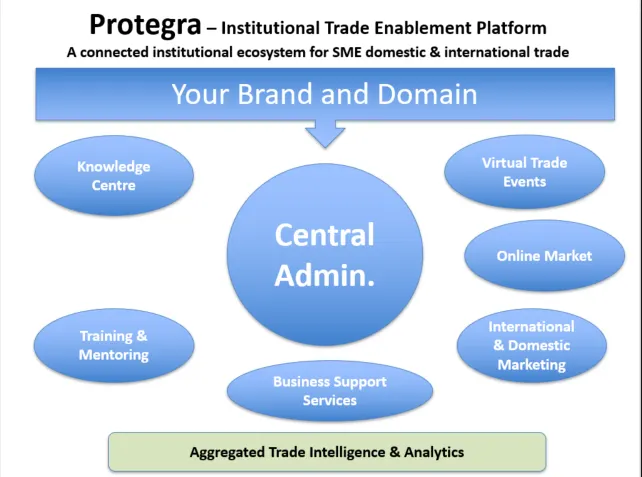
Core Elements of the Protegra Ecosystem
Protegra integrates multiple layers of digital and institutional infrastructure to support SME international growth.
Central Administration Hub
A central coordination layer enabling structured communication between participating companies, platform management and approved support services. The hub supports helpdesks, announcements, engagement tools and institutional coordination.
Knowledge Centre
Curated digital resources, trade intelligence and structured reference tools supporting export readiness and informed decision-making. Examples include resources such as The Exporters Almanac and The AEO Directory.
Training and Mentoring Layer
Modular digital and hybrid training programmes designed to progressively build export capability within participating SMEs.
Integrated Business Services Network
Access to trusted providers supporting international trade operations, including finance, insurance, logistics, legal services, accounting and specialist advisory support.
Virtual Trade Gateway
Structured digital trade missions and virtual market-entry events designed to connect SMEs with international buyers and partners.
Multilingual Market Visibility Infrastructure
Scalable multilingual digital visibility tools enabling SMEs to be discovered by international partners across multiple markets.
Digital Marketplace Layer
A structured environment in which SMEs can engage potential clients, partners and supply-chain participants.
Addressing the Six Core Trade Functions
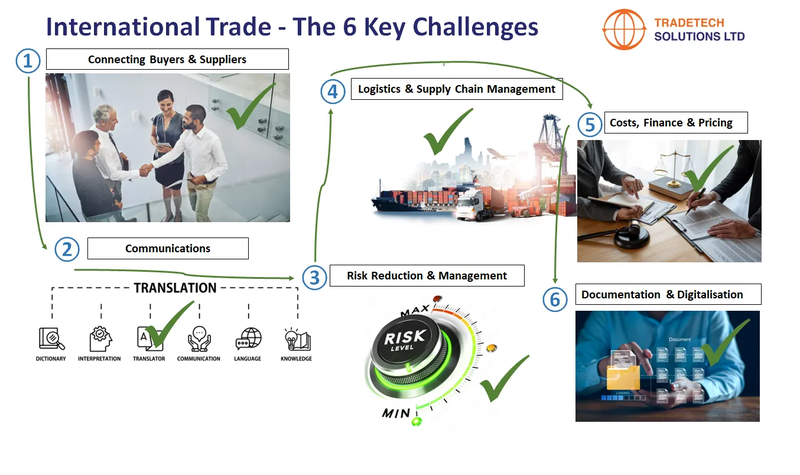
Through its integrated architecture, Protegra directly addresses the six core functions required for successful international trade.
Implemented in phased stages, the platform enables:
- Systematic introduction between buyers and suppliers.
- Structured cross-border communication channels.
- Risk mitigation through coordinated advisory and support services.
- Integration of logistics and supply-chain partners.
- Structured approaches to pricing, cost management and trade finance.
- Streamlined documentation and digital compliance processes.
In this way, Protegra transforms fragmented export support into a coherent operational framework for SME internationalisation.
Deployment Approach
Protegra is designed to be implemented progressively.
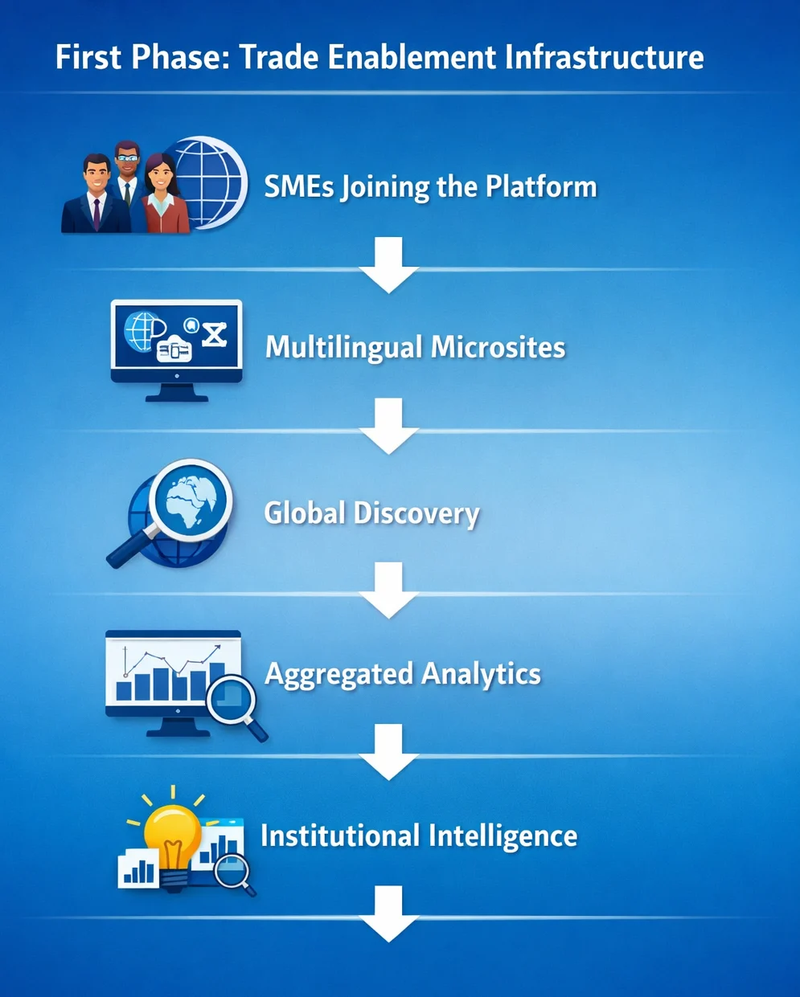
The first phase focuses on establishing the Trade Enablement Infrastructure that enables SMEs to achieve international digital visibility while generating valuable aggregated market intelligence for participating institutions.
The next section explains how Protegra operates in practice, outlining the key operational layers that together enable digital visibility, market intelligence and coordinated export capability development.
How Protegra Operates
Protegra – the digital Trade Enablement Infrastructure for SME internationalisation - enables institutions to establish a structured environment that connects SMEs with international markets, partners and specialist support services.
The ecosystem operates through several complementary components:
Multilingual Digital Visibility
Participating SMEs gain structured multilingual digital presence, enabling international buyers, partners and investors to discover their capabilities across multiple markets.
While each multilingual microsite strengthens the international visibility of the individual company, the Protegra ecosystem also creates an aggregated discovery layer that significantly expands the reach of participating exporters.
Aggregated International Visibility
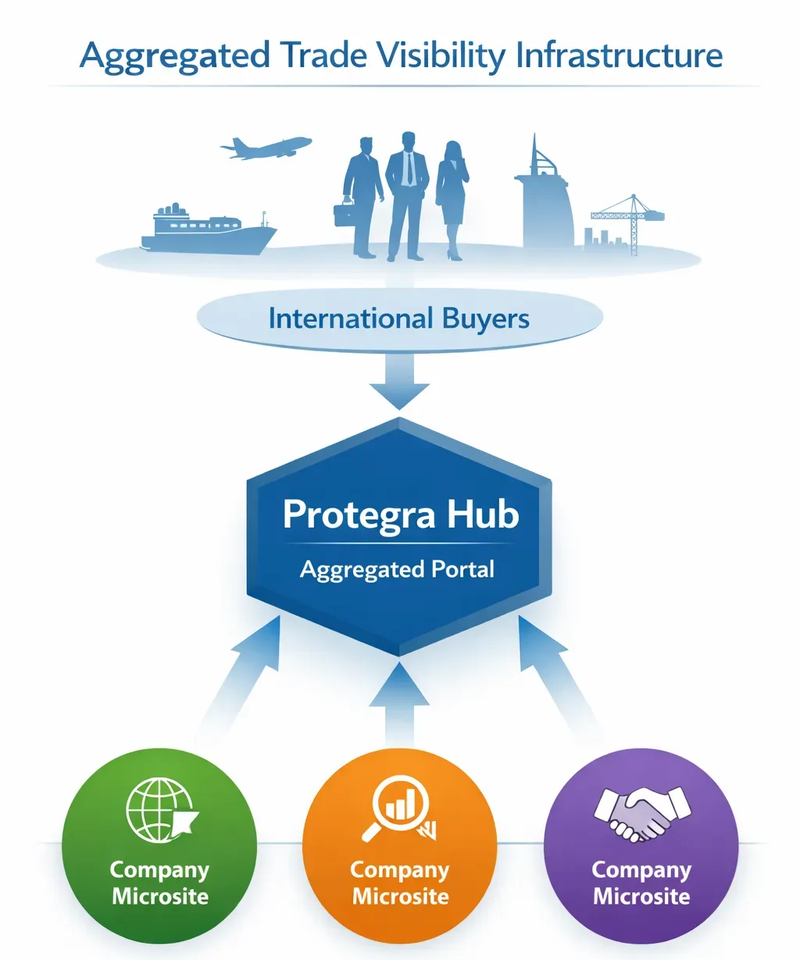
Each company participating in a Protegra ecosystem benefits from its own multilingual microsite, allowing it to present its products and services to international buyers in multiple languages.
In a Protegra environment, individual Multilingual Microsites generate their own discoverability, while the aggregated portal creates an additional international entry point that attracts buyers, investors and partners.
This combined structure strengthens visibility for individual companies while creating a central discovery gateway that international buyers can explore by sector, product category or country.
As more companies participate, the aggregated portal becomes a stronger international discovery hub, increasing traffic and visibility for the entire ecosystem.
Aggregated Market Intelligence
As international visitors discover companies through both individual multilingual microsites and the aggregated portal, valuable market intelligence begins to emerge — including which countries, sectors and product categories are attracting the greatest interest.
Export Capability Development
Training resources, knowledge centres and practical trade guides help SMEs strengthen export readiness and navigate international trade processes.
Collaboration and Community Infrastructure
The platform supports interaction between companies, institutions and sector networks, facilitating partnerships and supply-chain development.
Institutional Intelligence Dashboards
Participating institutions gain access to aggregated insights that help them design targeted support programmes and identify emerging export opportunities for their members.
Together, these elements create a scalable digital infrastructure that strengthens SME internationalisation while providing institutions with valuable market intelligence. The interaction between these operational layers can be summarised as follows:
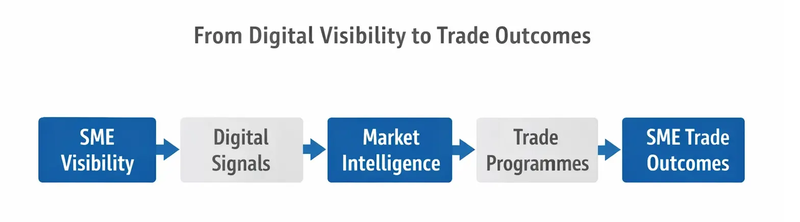
From visibility to trade outcomes: Protegra converts international digital discovery signals into actionable market intelligence that institutions can use to design targeted export programmes for their SME communities.
While these operational layers define the structure of the Protegra ecosystem, implementation begins with the establishment of a Trade Enablement Infrastructure.
The next section explains how this first phase enables SMEs to achieve international digital visibility while generating valuable market intelligence for participating institutions.
First Phase - The Trade Enablement Infrastructure
Protegra — the digital Trade Enablement Infrastructure for SME internationalisation — is designed to be deployed in structured phases.
The recommended starting point is the establishment of a Trade Enablement Infrastructure layer, implemented through the coordinated distribution of Multilingual Microsites and the aggregation of associated analytics.
At its simplest level, this first phase consists of two components:
- Providing participating SMEs with Multilingual Microsites that enable international digital visibility.
- Creating an institutional gateway that aggregates access to those microsites.
This approach delivers immediate export visibility for SMEs while simultaneously generating aggregated market intelligence for the distributing institution. Institutions can then translate this intelligence into targeted export support programmes.
Phase One - The Operational Layer
The distribution of multilingual microsites represents the first operational layer within the Protegra ecosystem.
It delivers two parallel outcomes:
- For SMEs: Immediate international market presence.
- For the distributing institution: A structured intelligence layer derived from aggregated digital activity.
This dual outcome is what transforms a simple marketing tool into trade infrastructure.
Value to SMEs
(Distributed via Chambers of Commerce, Trade Associations, Export Promotion Agencies or Banks )
Participating SMEs gain:
- A low-friction entry point into international markets.
- Discovery by overseas buyers searching in their native languages.
- A structured multilingual digital presence optimised for cross-border B2B visibility.
- The ability to test international demand without committing to high-cost expansion strategies.
- Enhanced global reach that complements — rather than replaces — their primary website.
For many companies, this represents the first measurable step toward structured internationalisation.
Value to Distributing Organisations
(Aggregated & Anonymised Market Intelligence)
At the institutional level, aggregated microsite analytics generate valuable insights across the SME base, including:
- Demand patterns by industry sector.
- Market interest indicators by country.
- Search and visibility signals by product or service category.
- Trends over time, identifying emerging versus established markets.
While individual company data remains anonymised, these aggregated signals can be analysed against the institution’s membership structure.
In effect, this converts digital visibility into actionable trade intelligence.
Organisational Use Cases
The aggregated intelligence layer supports several important institutional functions:
- Export promotion strategy and programme design.
- Structured SME market entry pathways.
- Data-informed virtual trade missions and business matchmaking.
Rather than operating reactively, institutions can prioritise markets based on real demand signals generated by their own SME community.
Strategic Benefits for Distributing Organisations
By embedding this infrastructure layer, Chambers of Commerce, Export Promotion Agencies, Trade Associations and Banks gain:
- A continuous flow of anonymised international market intelligence.
- A data foundation supporting export programmes and advisory services.
- A differentiated and scalable value proposition for members or clients.
- A deployable digital export infrastructure without internal build costs.
- A practical bridge between policy objectives and measurable outcomes.
- Stronger SME engagement through visible international traction.
Positioning Within the Protegra Ecosystem
Within the broader Protegra architecture, the Multilingual Microsite layer functions as:
- The first operational step in the digital trade enablement journey.
- A low-friction entry point for institutional deployment.
- A data-generating foundation for more advanced Protegra capabilities.
These advanced layers may include:
- Supply-chain visibility systems.
- Trade readiness scoring.
- Partner matching engines.
- Risk and compliance frameworks.
In infrastructure terms, this phase establishes the foundational layer of the Protegra trade stack — creating the visibility, data and engagement architecture upon which the wider ecosystem is built.
Once the Trade Enablement Infrastructure is established, aggregated digital activity begins generating valuable international market intelligence.
The following section illustrates the types of insights that can be produced.
Illustrative Analytics
For Illustration Purposes Only
The following examples use illustrative data to demonstrate the types of analytical insights generated by the Trade Enablement Infrastructure.
These analytics do not simply report digital activity. They convert international visibility signals into actionable trade intelligence.
In effect, the infrastructure functions as a continuous global market-sensing system for the SME community.
While the examples below present high-level summaries, in practice the underlying data can be analysed at significantly greater granularity and exported in structured formats (such as CSV) for integration with institutional systems.
Data and visibility infrastructure can reveal international demand patterns and emerging opportunities. However, institutions remain responsible for designing and implementing the programmes that convert those opportunities into tangible trade outcomes for their SME communities.
1. Demand Signals Over Time
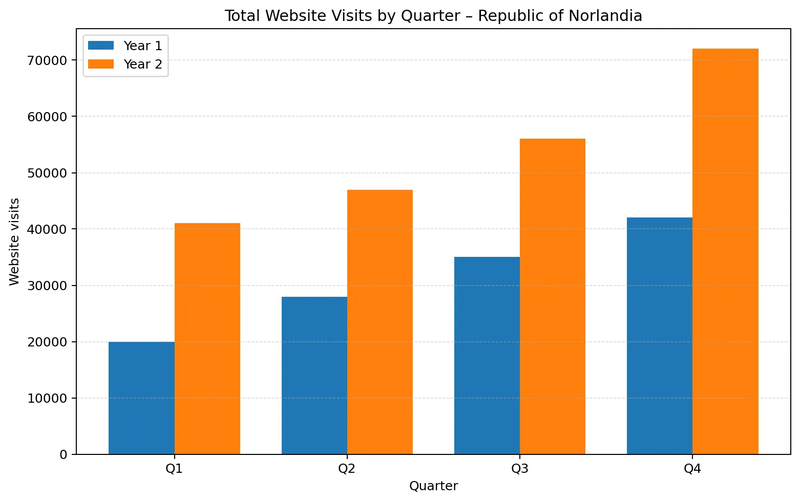
The first analytical layer tracks total international engagement across the Trade Enablement Infrastructure.
This provides insight into:
- Seasonal patterns in international interest.
- Growth or decline in demand signals over time.
- The impact of trade missions or promotional campaigns.
- Periods of accelerated international engagement.
This represents the macro demand signal generated by the SME community.
2. Geographic Demand Intelligence
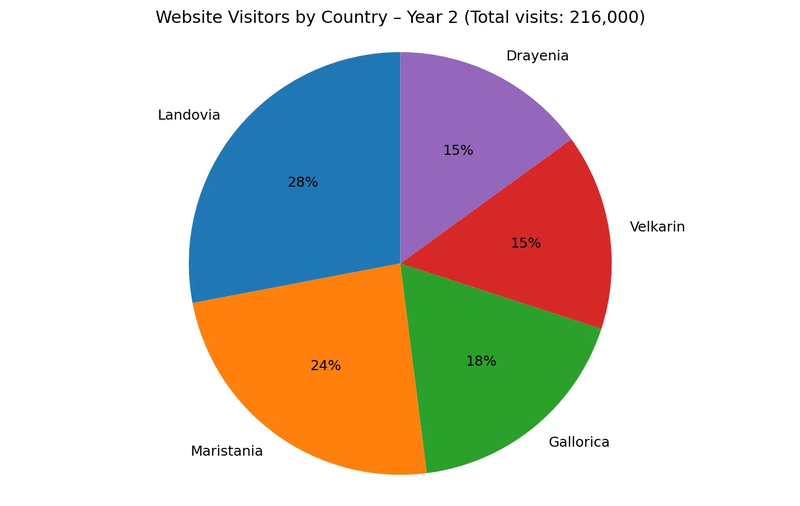
Understanding where international interest originates is critical for designing export programmes.
This analysis highlights:
- Countries generating the strongest engagement.
- Emerging geographic markets.
- Market concentration risks.
- Alignment (or misalignment) with institutional export priorities.
Institutions can therefore prioritise markets based on measurable demand signals rather than assumptions.
3. Industry-Level Market Interest
(NACE Classification)
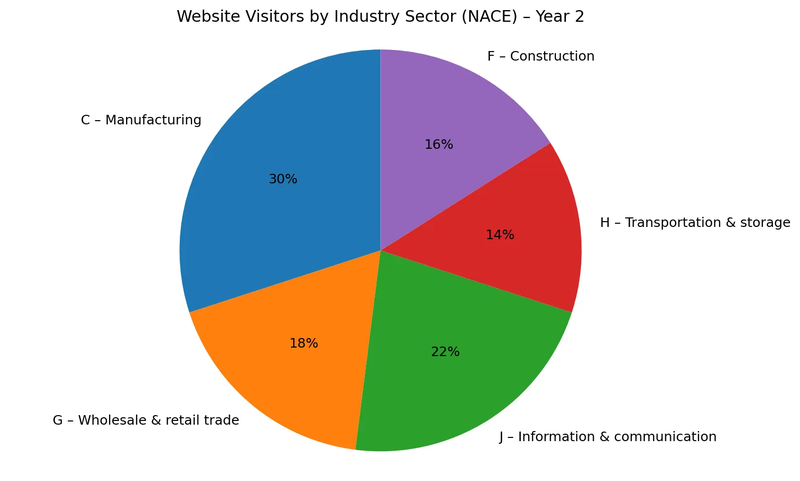
International engagement can also be analysed at the sectoral level using structured industry classifications such as NACE.
This enables institutions to support:
- Sector prioritisation strategies.
- Cluster development initiatives.
- Targeted trade delegations.
- Evidence-based allocation of support resources.
Sector analysis can be viewed in aggregate or segmented by country.
4. Product-Level market Interest
(Harmonised System - HS Classification)
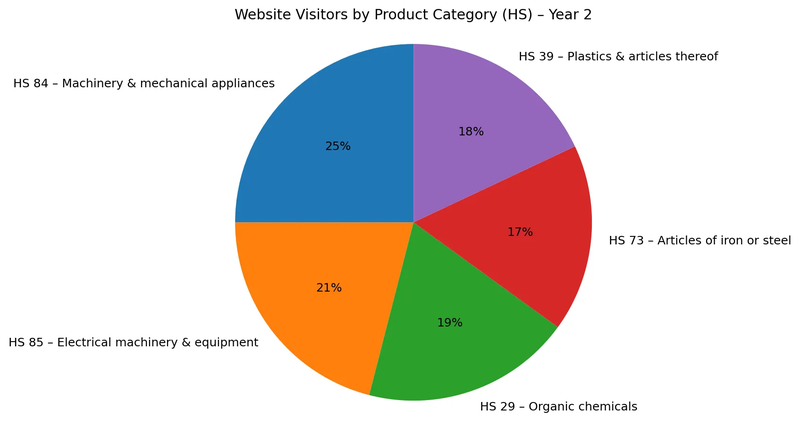
Interest can also be analysed at the product level using the internationally recognised Harmonised System (HS) classification.
This supports:
- Product-specific export readiness programmes.
- Identification of high-potential product categories.
- Alignment with tariff and regulatory frameworks.
- Market-entry preparation by product type.
As with sector analysis, product demand can be examined globally or by individual country.
5. Linking Market Intelligence to the SME Base
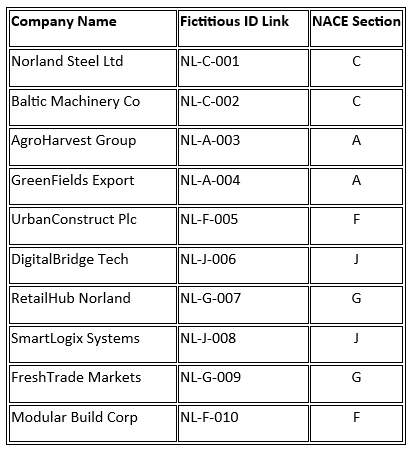
The next step is operationalisation.
Aggregated demand signals can be cross-referenced with companies participating in the Trade Enablement Infrastructure, without compromising privacy.
Companies already publish structured information including:
- Industry classifications.
- Product categories.
- Core business capabilities.
The system links demand signals to all relevant companies within these categories without exposing individual traffic data.
This preserves anonymity while enabling structured institutional engagement.
The resulting internal reference ID can connect directly to:
- the organisation’s CRM system.
- the company’s Multilingual Microsite.
- internal export advisory workflows.
6. Mapping Product Demand to Companies
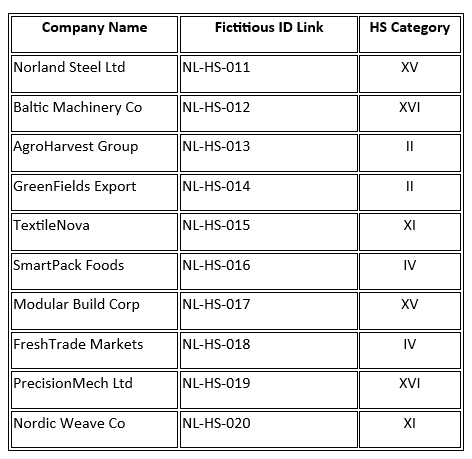
The same methodology can be applied at the product level.
Institutions can identify which companies operate within high-interest product categories and design targeted initiatives such as:
- Advisory outreach programmes.
- Export readiness workshops.
- Buyer introduction programmes.
- Trade mission invitations.
This is where analytics becomes operational action.
Strategic Implications
The Trade Enablement Infrastructure therefore functions not merely as a reporting tool, but as a decision-support system for institutions responsible for export development.
It supports:
- Export programme design.
- Trade mission targeting.
- Cluster development initiatives.
- Financial support allocation.
- Policy engagement and economic development planning.
Most importantly, the intelligence is derived from real international search behaviour and digital engagement, creating a continuous demand signal from global markets.
These illustrative insights demonstrate how aggregated digital activity can be transformed into actionable trade intelligence.
The next section outlines how Protegra can be implemented in structured stages, enabling institutions to progressively establish this trade enablement infrastructure within their SME ecosystems.
Implementation & Deployment
Protegra – the digital Trade Enablement Infrastructure for SME internationalisation - is designed to be deployed progressively, allowing institutions to establish digital trade infrastructure without major organisational disruption.
Implementation normally begins with a review of the services and programmes already provided by the participating organisation. Protegra is designed to integrate with existing initiatives — such as training programmes, export advisory services, trade missions and partner networks — strengthening and extending their impact rather than replacing them.
Deployment typically begins with the Trade Enablement Infrastructure layer, enabling participating SMEs to achieve multilingual international visibility while generating aggregated market intelligence for the institution.
From this starting point, implementation generally progresses through three practical stages:
Stage 1 – Infrastructure Establishment
(Creating the multilingual visibility and data foundation.)
Participating SMEs receive multilingual microsites and are integrated into the institutional gateway. This immediately creates international visibility and begins generating aggregated demand signals.
Stage 2 – Intelligence Activation
(Generating market insights and demand signals.)
Aggregated analytics begin to reveal geographic, sectoral and product-level demand patterns. Institutions can use these insights to refine export promotion strategies and prioritise international engagement.
Stage 3 – Ecosystem Expansion
(Extending services, collaboration and institutional capabilities.)
Once the data layer is established, additional Protegra modules can be deployed, including:
- Supply-chain visibility layers.
- Trade readiness programmes.
- Partner matching tools.
- Risk and compliance support services.
This phased approach allows institutions to begin with a practical operational layer while progressively expanding the ecosystem over time.
Institutions interested in strengthening SME internationalisation through coordinated digital infrastructure are invited to explore potential collaboration with TradeTech Solutions.
The following section outlines how such partnerships can be structured to support the deployment of Protegra within institutional SME ecosystems.
Partnering with TradeTech Solutions – Building Trade Infrastructure Together
Protegra – the digital Trade Enablement Infrastructure for SME internationalisation - is designed to be deployed through institutional partnerships.
The objective is straightforward: to enable organisations to deliver scalable, data-driven trade infrastructure to their SME communities — without the complexity of building and maintaining the underlying technology themselves.
TradeTech Solutions (TTS) works alongside partner organisations to structure, customise and deploy a Protegra platform aligned with their strategic objectives and the needs of their business communities.
Why Partner?
Most Chambers of Commerce, Export Promotion Agencies, Trade Associations and Financial Institutions already provide elements of export support.
Protegra does not replace these services.
It integrates, enhances and scales them within a coordinated digital framework.
In many cases, partner organisations already have:
- A corporate base of 500+ SMEs with export potential or international ambitions.
- Existing advisory, finance or trade support capabilities.
- A mandate to strengthen internationalisation outcomes.
The partnership process therefore focuses on identifying what is already in place — and building the missing infrastructure layers required to deliver a coordinated trade ecosystem.
What a TTS Partnership Offers
Partnership structures are flexible and can be aligned with the priorities of each organisation.
A collaboration with TradeTech Solutions may include:
- Recurring revenue participation models.
- Access to aggregated and anonymised trade intelligence analytics.
- A scalable digital value proposition for members or clients.
- Deployment of export infrastructure without internal technology build requirements.
The emphasis is on long-term infrastructure collaboration, rather than short-term promotional initiatives.
Strategic Advantages for Partner Organisations
By embedding Protegra within your service portfolio, your organisation can:
- Strengthen SME engagement through measurable international traction.
- Align advisory, finance and trade mission activities with real demand signals.
- Differentiate your institutional offering in an increasingly competitive landscape.
- Expand your role from service provider to trade infrastructure enabler.
As participating SMEs increase their international activity, organisations gain greater scope to deliver complementary services — including finance, advisory support, certification, insurance and logistics.
Starting the Conversation
If your organisation serves a corporate membership or client base that could benefit from structured Trade Enablement Infrastructure, we invite you to begin a strategic discussion.
This is not a commitment to deploy, but an opportunity to explore:
- Institutional objectives.
- Capability gaps.
- Potential partnership models.
- Phased implementation options.
To arrange an exploratory discussion, simply contact TradeTech Solutions by email.